
Event
Genesis AI Conference 2026
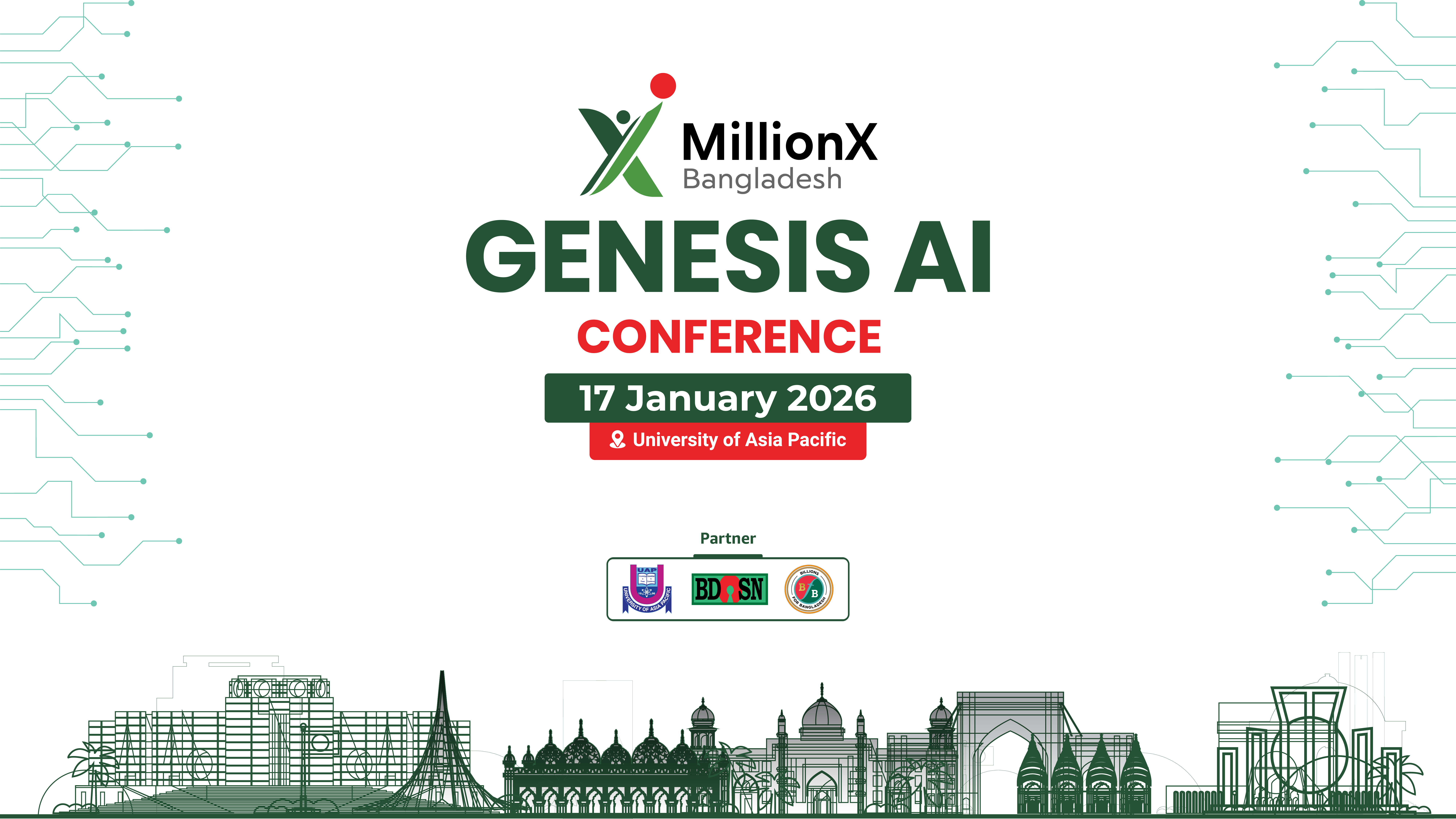
The MillionX Genesis AI Conference, convened on January 17, 2026, at the University of Asia Pacific in Dhaka, stands as a watershed moment in the technological history of Bangladesh. The event brought together a diverse and powerful coalition of stakeholders: government policymakers, industrial titans, academic leaders, and the influential Non-Resident Bangladeshi (NRB) diaspora, all united under the ambitious banner of “Creating a Million 10x AI Minds”.
Summary
The MillionX Genesis AI Conference, convened on January 17, 2026, at the University of Asia Pacific in Dhaka, stands as a watershed moment in the technological history of Bangladesh. Emerging from the momentum of the “MillionX Build-a-thon” – which mobilized over 5,000 participants from 34 universities – this conference was not merely a celebratory gathering but a strategic convocation designed to chart the nation’s course in the age of artificial intelligence. The event brought together a diverse and powerful coalition of stakeholders: government policymakers, industrial titans, academic leaders, and the influential Non-Resident Bangladeshi (NRB) diaspora, all united under the ambitious banner of “Creating a Million 10x AI Minds”.
The central thesis of the conference was that Bangladesh, currently positioned at a critical demographic juncture, possesses a unique opportunity to “leapfrog” traditional developmental stages by aggressively adopting AI technologies. The objective, articulated repeatedly throughout the proceedings, is to leverage AI not just for incremental efficiency, but to drive a ten-fold (“10x”) increase in national economic output, or GDP. This vision moves beyond the standard IT outsourcing model that has characterized the Global South’s tech engagement, proposing instead a model based on “precision,” “high-impact application,” and “problem-solving”.
Over the course of a full day, discussions traversed the spectrum of AI implementation – from the philosophical underpinnings of “human-in-the-loop” systems to the gritty realities of industrial automation in FMCG factories, and from the pedagogical crisis in universities to the funding bottlenecks for startups. Speakers rejected the dystopian narratives of job displacement that often dominate Western discourse, framing AI instead as a “democratizer” and a “helping hand” capable of bridging the stark divide between rural and urban Bangladesh.
However, the conference did not shy away from hard truths. Panelists candidly addressed the “entropy” of government bureaucracy, the obsolescence of current university curricula, and the imminent threat of labor displacement in low-skill sectors if re-skilling is not prioritized. The event concluded with the ratification of a “Bangladesh AI Action Charter” framework, setting a rigorous 90-day timeline for tangible deliverables, moving the conversation from rhetoric to accountability.
Keynote Summary
Muhammad Emdad-Ul-Bari, Chairman of BTRC, offered a practitioner's account of Bangladesh's technological journey — from the introduction of mobile cellular networks to the present AI inflection point. He introduced a distinction that cut to the heart of Bangladesh's digital challenge: the difference between a "Connectivity Gap" (people who are not connected) and a "Usage Gap" (people who are connected but cannot use the technology meaningfully) — arguing the more important and neglected concept is a third gap: the "Usefulness Gap", where connectivity and affordability exist but the available services aren't useful to the people who have access.
"The farmer needs access to credit, good seed, fertilizer, market connectivity. Not a drama or a cricket match. Connectivity without usefulness is not development." — Muhammad Emdad-Ul-Bari
He noted Bangladesh is now the sixth-largest internet user group globally, yet 96% of users engage without knowing how to read or write code — a "missing OS" problem at national scale — and identified three urgent national infrastructure needs: high-connectivity rollout (5G readiness), safe device access, and large-scale data centers combined with a cross-ministry data exchange framework.
Strategic Synthesis
The Leapfrog Doctrine. The conference collectively rejected linear development. Bangladesh need not replicate decades-long outsourcing build-ups elsewhere — AI disrupts the rules of the game, where precision, domain depth, and high-trust delivery now matter more than scale of labor.
The Parallel Institution Model. A recurring theme was that waiting for government to lead is not a strategy — MXB, BRAC, industry, and universities must build the ecosystem in parallel with, not contingent on, government endorsement.
The Democratization of Expertise. A civil engineering team beating computer scientists in an AI competition was cited as evidence of a structural shift: when coding becomes the "alphabet of today's world," domain expertise becomes the scarce commodity, not technical skill.
Human-in-the-Loop as the Non-Negotiable. Despite the day's aggressive push for AI adoption, every sector maintained the same safeguard: AI augments human judgment, it does not replace it.
The Diaspora as Sovereign Wealth. The NRB diaspora was reframed throughout the day — not as a source of remittances for consumption, but as Bangladesh's largest untapped venture capital pool, mentorship network, and bridge to global markets.
Proceedings & Reports
Proceedings
Genesis AI Conference 2026 — Official Conference Proceedings
Engineering 10X Bangladesh Through AI, Knowledge Systems & Institutional Transformation
Videos
Gallery
The MillionX Genesis AI Conference, convened on January 17, 2026, at the University of Asia Pacific in Dhaka, stands as a watershed moment in the technological history of Bangladesh. Emerging from the momentum of the "MillionX Build-a-thon" — which mobilized over 5,000 participants from 34 universities — this conference was not merely a celebratory gathering but a strategic convocation designed to chart the nation's course in the age of artificial intelligence. The event brought together a diverse and powerful coalition of stakeholders: government policymakers, industrial titans, academic leaders, and the influential Non-Resident Bangladeshi (NRB) diaspora, all united under the ambitious banner of "Creating a Million 10x AI Minds".
The central thesis of the conference was that Bangladesh, currently positioned at a critical demographic juncture, possesses a unique opportunity to "leapfrog" traditional developmental stages by aggressively adopting AI technologies — leveraging AI not just for incremental efficiency, but to drive a ten-fold ("10x") increase in national economic output. This vision moves beyond the standard IT outsourcing model that has characterized the Global South's tech engagement, proposing instead a model based on precision, high-impact application, and problem-solving.
Over the course of a full day, discussions traversed the spectrum of AI implementation — from the philosophical underpinnings of "human-in-the-loop" systems to the gritty realities of industrial automation, and from the pedagogical crisis in universities to the funding bottlenecks for startups. The event concluded with the ratification of a Bangladesh AI Action Charter framework, setting a rigorous 90-day timeline for tangible deliverables, moving the conversation from rhetoric to accountability.
Theme
Bangladesh possesses a unique opportunity to "leapfrog" traditional developmental stages by aggressively adopting AI — not for incremental efficiency, but to drive a ten-fold increase in national economic output.
Why Genesis Mattered
First nation-scale convocation aligning government, industry, academia, and NRB diaspora on AI strategy.
Set a public 30 / 60 / 90-day delivery cadence for national AI commitments.
Produced the ratified framework for the Bangladesh AI Action Charter.
Anchored an ethics-first, human-in-the-loop posture for national AI deployment.
Cross-sector coalition: government, industry, academia, NRB diaspora.
Agenda
10:30–11:30 AM — Bangladesh's AI Moment and the Road to a Knowledge-Driven Future
11:30 AM–12:30 PM — AI for Bangladesh: Society, Economy, and Development
1:30–3:00 PM — Building Bangladesh's AI Talent and Innovation Ecosystem
3:00–4:30 PM — Bangladesh AI Action Charter + Leadership Perspectives
The People
Speakers & Guests
Keynote Speaker
Speakers
Abobokor Hanip
Chairman and Chancellor, Washington University of Science & Technology
Asif Saleh
Executive Director, BRAC
Dr. Celia Shahnaz
Professor, BUET
Dr. Arif Dowla
Managing Director, ACI
Dr. Khondaker A. Mamun
Professor, United International University.
Dr. Sadia Kazi
Chairperson, Dept. of CSE, BRAC University
Dr. Abdul Hasib Chowdhury
Pro-Vice Chancellor, BUET
Dr. Tamzeed Islam
Research Scientist, LLM Agents
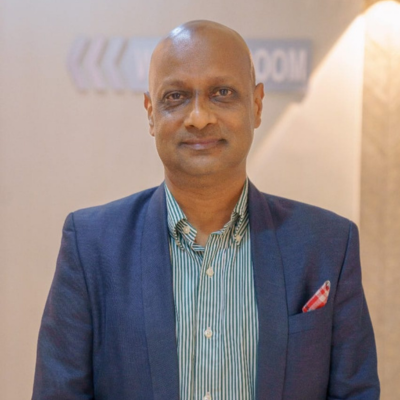
M Manjur Mahmud
President, Datasoft Limited

Dr. Zunaid Kazi
CEO, Knowtomation
Malik Mohammed Sayeed
CEO, Square Toiletries
Prof. Dr. Qumrul Ahsan
Vice Chancellor, University of Asia Pacific
Prof. Mohammad Tamim
Vice Chancellor, Independent University Bangladesh
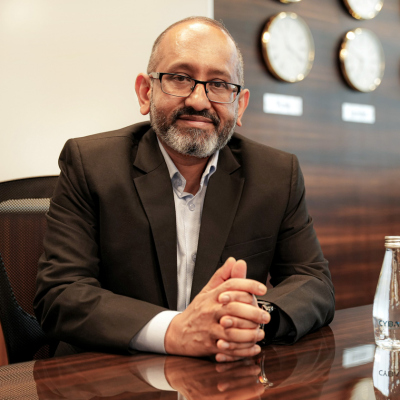
Mohammad Mahdee-uz Zaman (Apu)
VP, Cybage
Mohammed Oli Ahad
CEO, Dhaka AI La Limited)
Rakibul Hassan
Chief Technology Officer, Link3 Technologies
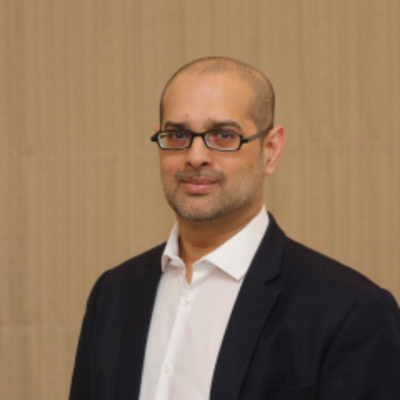
Zafar Sobhan
Editor, Dhaka Tribune
Sabiha Akter Nib
Participant, National AI Build-A-Thon

Keep Exploring
More Events
- 26Oct
October 26, 2026
Prism AI Creative Awards 2026
Bangladesh's First National AI Creativity Competition Where creativity meets artificial intelligence.
- 26Dec
December 26, 2026
International AI Builders Congress
International AI Builders Congress 2026 — Build Products. Create Jobs. Grow Economies. Solve Global Problems. A six-month builder journey culminating in a global gathering of 5,000+ AI builders on December 26, 2026 at Daffodil International University, Ashulia, Dhaka.